
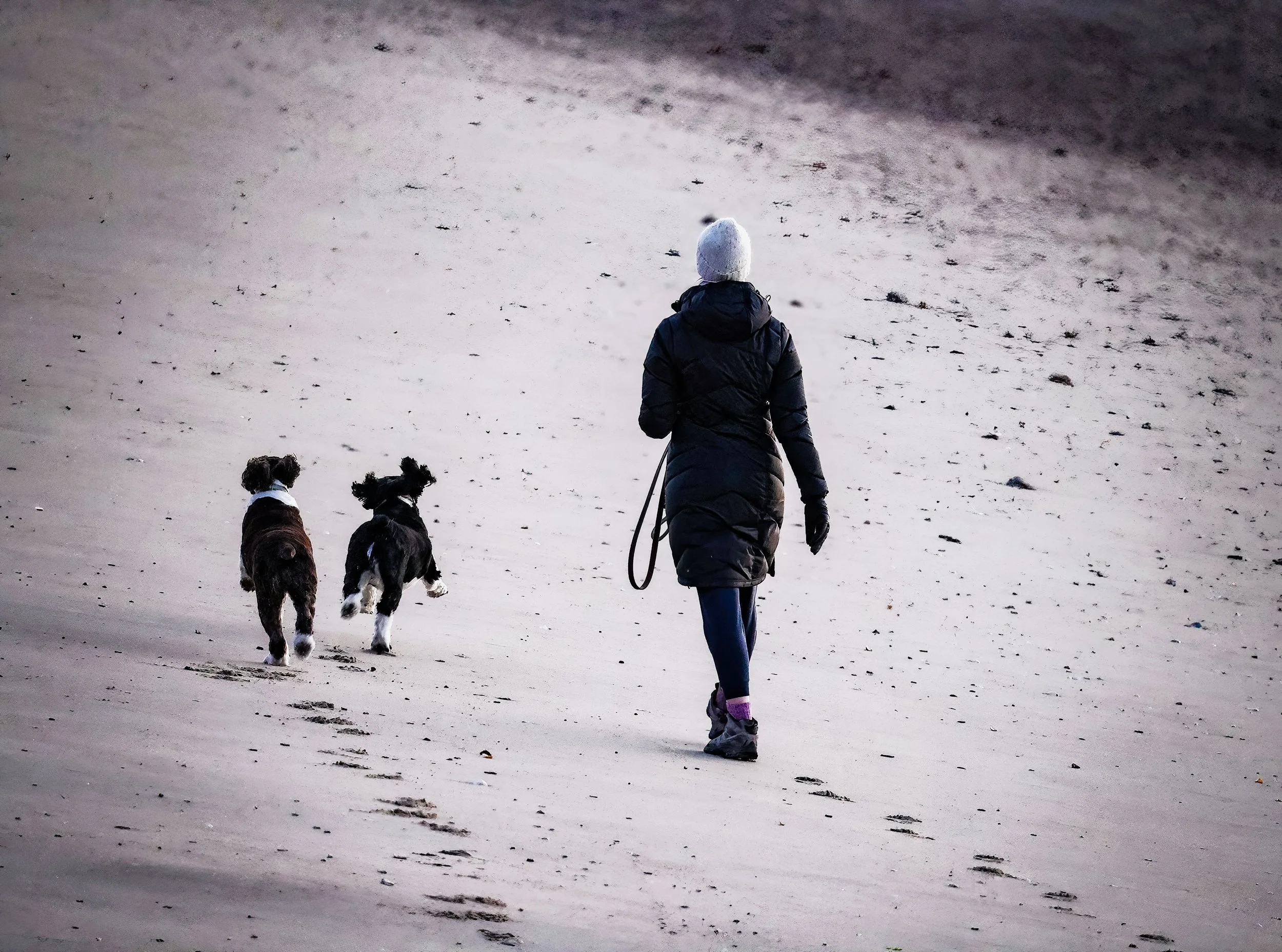
I started writing this on a dog walk.
I was trying to be mindful of the space around me, looking up and taking notice of my surroundings. The sun was out, but every now and then a cloud would come pass over it, hiding it for a while before it appeared again. Life is a little like that. The sun comes out, the clouds come over, then the sun appears again. A constant movement between light and shade. I often encourage my clients to check in with me about their inner world as a weather pattern. It can be helpful to use metaphors when we are finding it difficult to express the right feeling or emotion in words. I began to think that is also something of what it can feel like to find ourselves in the world today, that ‘space between’ and on a personal level what that means for me.
We live in a mixed and melting world. Cultures meet, move and influence one another. Some people feel a strong pull back towards their roots. Others resist them, wanting to move forward and fully embrace the place they now find themselves in. Many feel as though they have one foot in each world. Some feel they belong fully to neither.
And sometimes, it can feel like standing in a corridor.
One door leading one way and another door leading somewhere else, but you are not quite sure which one to open.The corridor can be an uncomfortable place to be. It can feel empty. Uncertain. You don’t know where you are going or what to expect. And yet, I think many people spend more of their lives in that corridor than we acknowledge.
I know something about that corridor.
I was born in Syria to Syrian parents and Arabic was my first language. I came to Scotland when I was around one and grew up in Edinburgh, my first experiences of nursery, school and friendships were Scottish. So my identity was developing in one place, while home felt very different. As a child, I don’t think I had the language or understanding to make sense of that difference. All I knew was that there seemed to be different rules depending on where I was. Looking back now, I have a much greater understanding of what may have been happening for my parents too. They had left their country, their culture and everything familiar to build a life somewhere else, there was a fear of losing something in that process. Some of that fear was passed on to me, not necessarily consciously or necessarily intentionally, but I felt that pressure.
At the same time, I desperately wanted to belong, I wanted to be one of the gang, the inner circle. It is deeply important to our survival that we are part of the group. For much of human history being part of a group increased our chances of survival. We are social beings who depended on each other for protection, warmth and care. We view social rejection as a potential threat. This is ancient writing and being alone could mean being exposed to danger.
I remember the register being called at school and hearing all these Scottish names. Then mine would come along and suddenly I felt very aware of myself. My name stood out, and the children noticed. I was called names like “bulky Mulki”, “sulky Mulki”, “Milky Way”. They might sound childish now, but they didn’t feel childish when you are a child. They hurt because they highlighted something I was already aware of.
I was different. And being different felt hard. So I started adapting.
I began what I now describe as my own process of “white washing” not as a clinical or academic term, but as my way of describing what it felt like to gradually soften, hide or change parts of myself that seemed to make me stand out. The Oxford Learner’s Dictionary defines whitewash as an attempt to hide unpleasant facts or make something seem better than it really is. That isn’t quite a definition of cultural assimilation, but it captures something of how the word feels to me when I think about my own experience, because I wasn’t consciously thinking, I am going to erase parts of my culture.
I was thinking: How can I fit in? How can I be less different?How can I make this easier?
And perhaps this is where masking begins.
Not necessarily in the way we often talk about masking in relation to neurodivergence, but in the broader sense of learning which parts of ourselves feel acceptable to show and which parts choose to hide, softened or changed. We learn to read the room. We learn how to speak, behave, dress, respond and even which parts of our family or culture to talk about. We become very good at adapting. Sometimes so good that we lose sight of where the adapting ends and we begin. From the outside, this can look like confidence, competence or simply “fitting in”. Inside, it can be exhausting, and over time, masking can make it difficult to know what is genuinely us and what we have learned to become in order to belong.
What does this have to do with therapy?
Quite a lot, actually.
Because when we talk about mental health and therapy, we can sometimes forget that psychological theories did not develop in a cultural vacuum. Much of the psychological theory and therapeutic practice we are familiar with has developed within Western cultural contexts, that doesn’t make it wrong. It does mean that some of the assumptions within it deserve to be examined. Ideas such as independence, autonomy, individual choice, self-expression and self-actualisation can be incredibly valuable, but they don’t necessarily mean the same thing to everyone.
For someone from a more collective or family-oriented culture, the question of “What do you want?” may not be as straightforward as it sounds.
Because the answer may also involve us thinking about the others we will affect in the “collective”:
What will this mean for my family?
What happens to my relationship if I choose myself?
Where does loyalty end and self-abandonment begin?
These aren’t simply individual psychological questions, they can be cultural questions too and if we don’t acknowledge that, we can move to pathologise things that may have a much more complex story behind them.
Take people-pleasing, for example. We might quickly understand it as a lack of boundaries or an inability to prioritise yourself and sometimes it is, however, what if pleasing others has also been a way of maintaining connection? What if you grew up learning that being respectful meant not challenging your parents? What if saying no was not simply saying no, but carried a whole set of meanings around respect, loyalty, rejection or shame?
That doesn’t mean every behaviour should be excused because of culture and culturallyaware therapy isn’t about saying, “That’s just your culture.” It is about becoming curious about the whole picture, the origins of the belief, the purpose and outcome if you challenge it. Culturally aware therapy shouldn’t be about replacing one set of assumptions with another. It shouldn’t involve assuming that every Arab client, every South Asian client, every Black client or every person from a particular cultural background thinks or behaves in the same way. Culture is not a box we put someone into, it is one part of the context in which their identity has developed.
Going back to the corridor analogy, you don’t have to choose one door.
You can love your family and still need boundaries.
You can respect your parents and disagree with them.
You can value your culture and question parts of it.
You can feel deeply connected to where your family came from while also feeling at home somewhere else.
You can reject parts of what you inherited without rejecting the people who gave it to you.
And you can choose something different without that automatically meaning you have betrayed where you came from.
Sometimes therapy can become a place where these contradictions are allowed to exist, not everything has to be resolved into a neat answer. Perhaps the work is first about understanding why you feel you have to choose at all. The corridor isn’t necessarily a problem. That uncomfortable space between identities, expectations, cultures and versions of ourselves. We often want to get out of it as quickly as possible as we hate discomfort and uncertainty. We want to know who we are and where we belong.
But perhaps the corridor isn’t simply a place of confusion, it can also be a place where something new is created and where you get to decide what you reclaim, what you change.
For me, that little girl in Edinburgh was trying very hard to work out how to belong. She didn’t have the language for cultural identity, assimilation or masking. She simply knew that being different hurt, and that belonging felt important. I don’t think she needed to choose between being Syrian and being Scottish, she needed space to understand that she could be both.
For me, culturally aware therapy isn’t about having a checklist of cultural facts. It isn’t about assuming that because someone is from a particular family background, we already understand them. It is about being willing to notice the lens through which we are working and what happens when we make space for the client’s culture to be part of the therapy, rather than something that sits outside it?
A therapist can’t tell someone which door to walk through. Our job is to sit with them in the corridor, to understand why they are there, to listen to the different voices pulling them in different directions, and eventually, to help them realise that they may not have to choose between the two doors at all. A place where they know where they have come from and where they are going. Something that feels less like choosing between identities, and more like finally being allowed to inhabit your own, maybe that is what finding yourself really means. Not becoming someone completely separate from where you came from. Not returning to a version of yourself that no longer fits.
But slowly working out which parts are truly yours and being able to let the sun come through, even when the clouds are still there.